Uber · 2015–2019
Rider Music — personalizing the trip
Senior Product Designer, Music & Partnerships
Overview
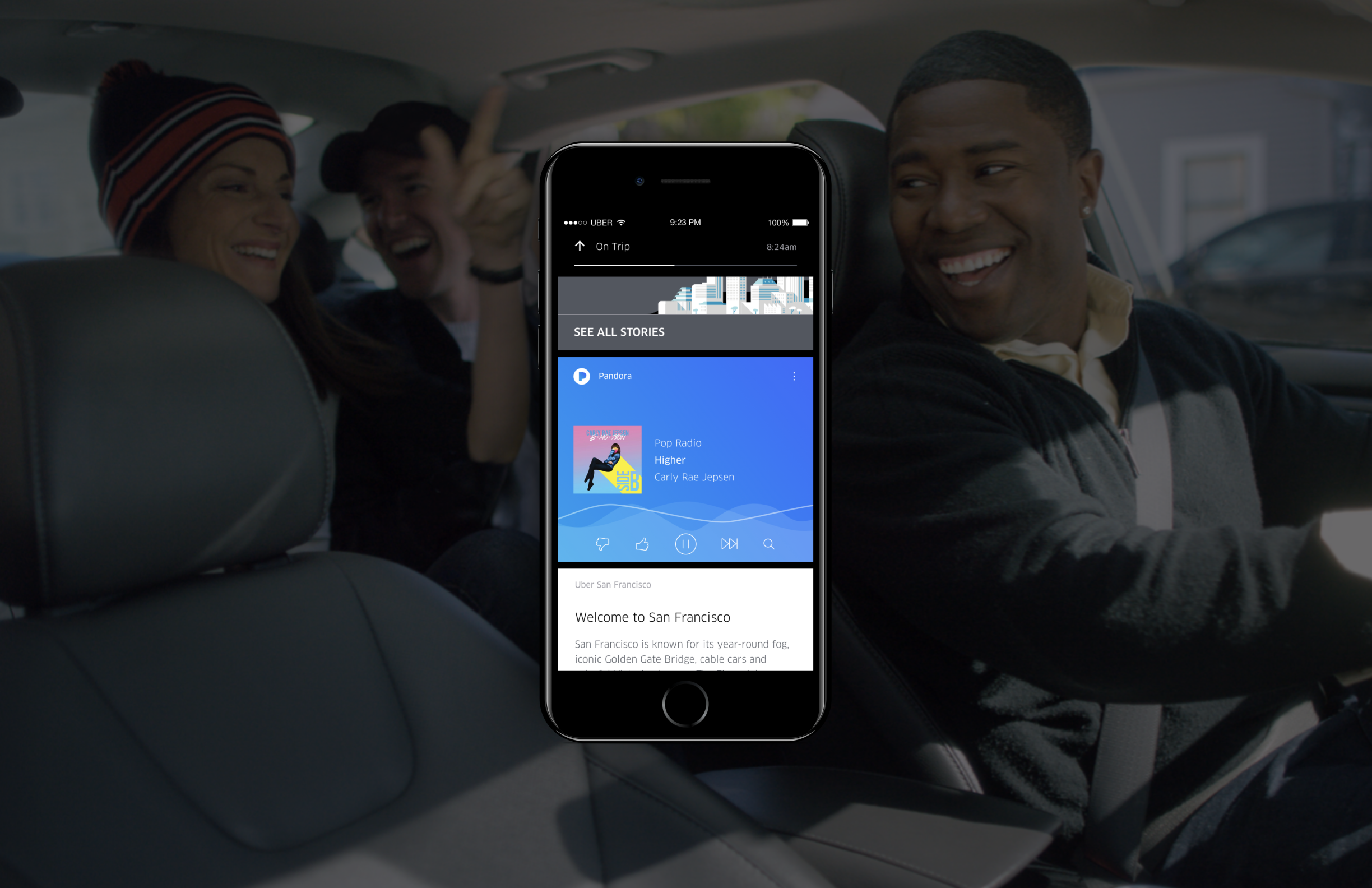
As Senior Product Designer on Uber’s Music & Partnerships team, I was hired to reboot the in-ride music program after a prior partnership with Spotify had failed to gain traction. I partnered with a product manager, front/back-end engineers, data science, and a user researcher.
Research
The first thing we did was look at what had gone wrong with the existing product to understand why people weren’t using it. We also conducted new primary research — riding along with drivers in their cars to observe how they already used audio, and mapping the full rider and driver journey to identify where music could add the most value.
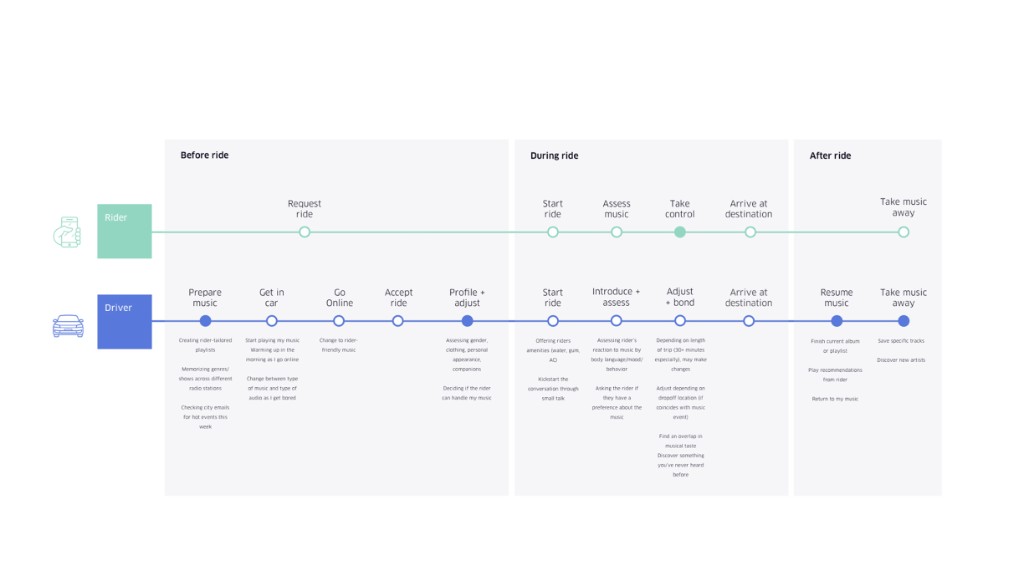
Design Framework
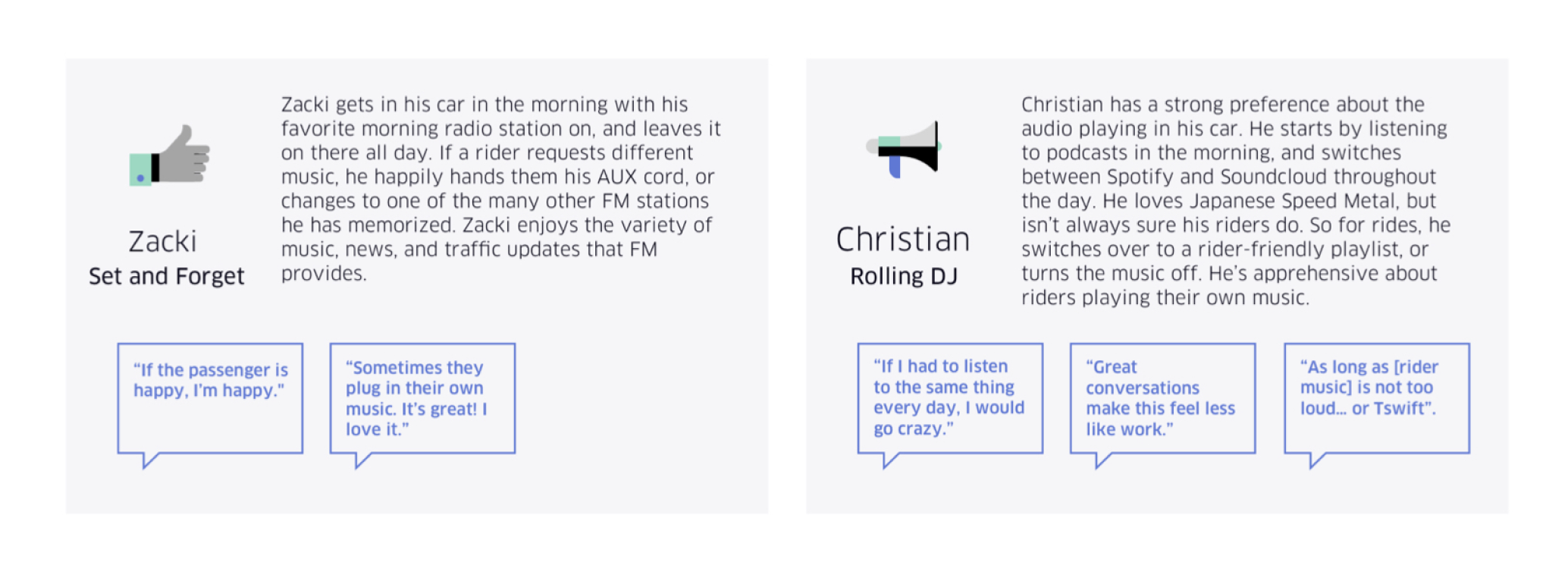
From the research, we built a set of personas and a design framework. On the driver side, we identified the “Set and Forget” driver who leaves the radio on all day and happily accommodates riders, and the “Rolling DJ” who actively curates what plays and has strong opinions about the music in their car. On the rider side, the “Social” rider who asks for the AUX cable as soon as she gets in, and the “Transport” rider who just wants to commute and has no interest in choosing music each time.
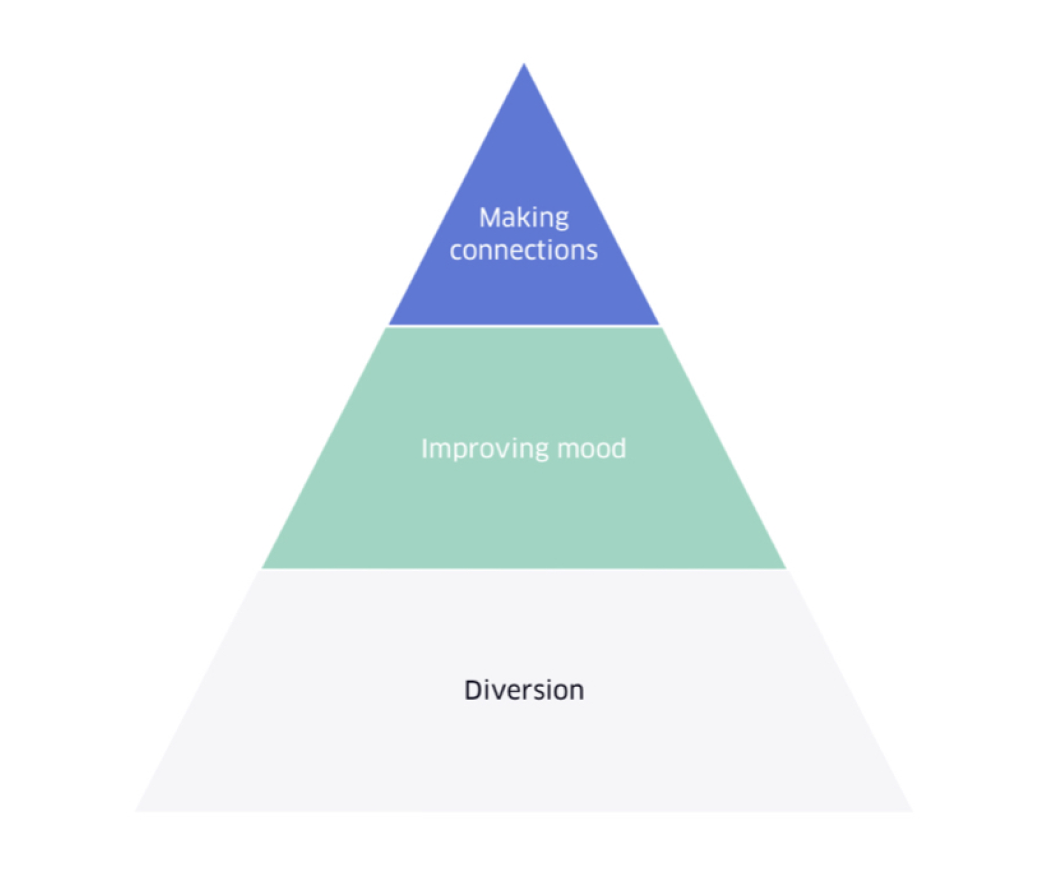
We also developed a hierarchy for how audio played a role in the car. For the vast majority of people, music was mostly going to fade into the background — filling the awkward silence between two humans. Some drivers used it more intentionally to improve mood, playing relaxing music to put riders at ease. But the best drivers were doing something we didn’t expect: they were using music to make connections. They’d play something interesting or unexpected, then use it to strike up conversation. This was a major aha moment — music wasn’t just entertainment, it was a social tool, and that desired moment of connection at the top of the pyramid became our north star.
Driver Music
We decided to start with drivers first — unlike the prior product launch, which had largely ignored them. That was the core reason it never hit product-market fit: drivers simply refused to connect their phone to the AUX cable, which precluded any rider experience in the car.
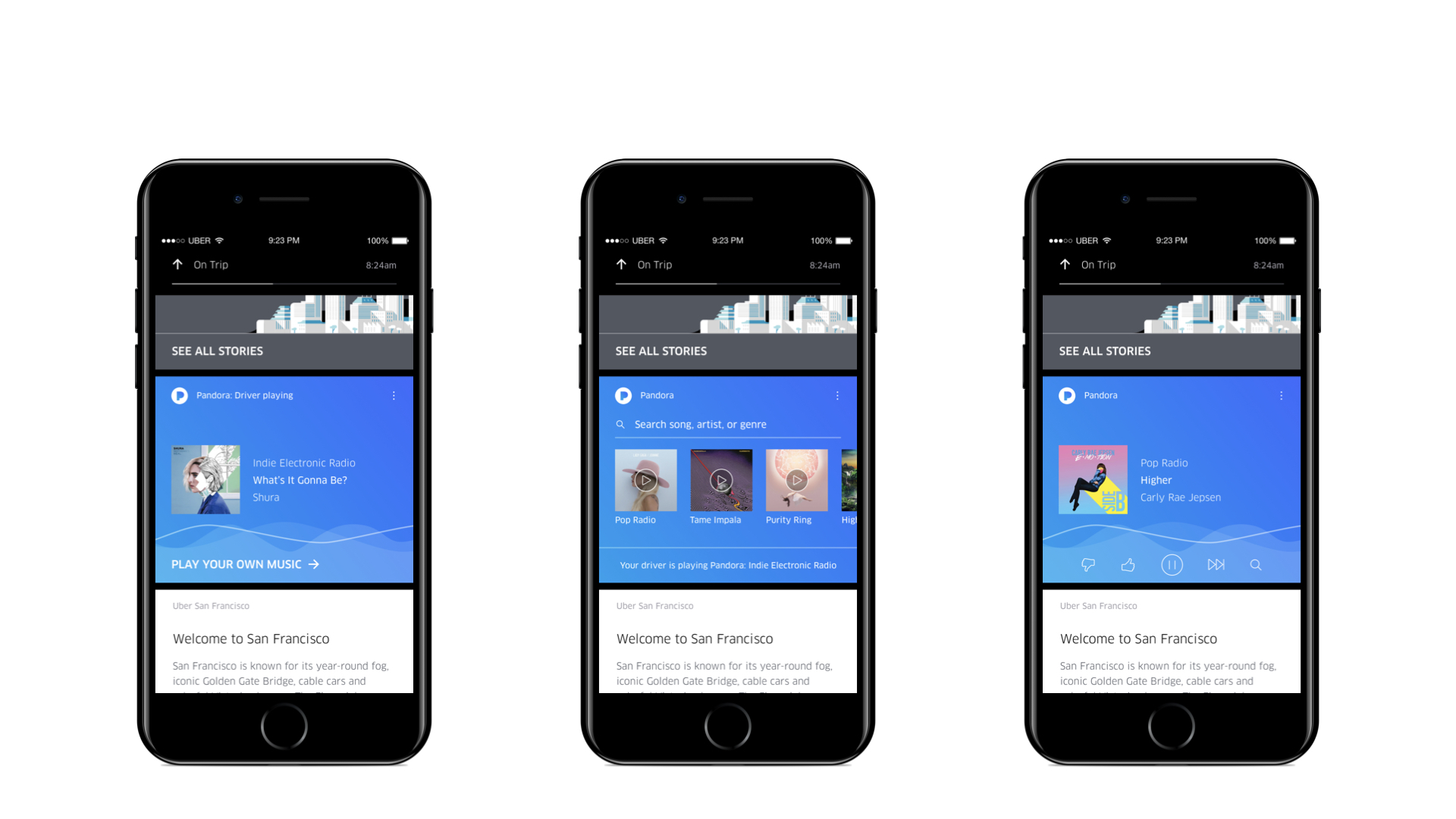
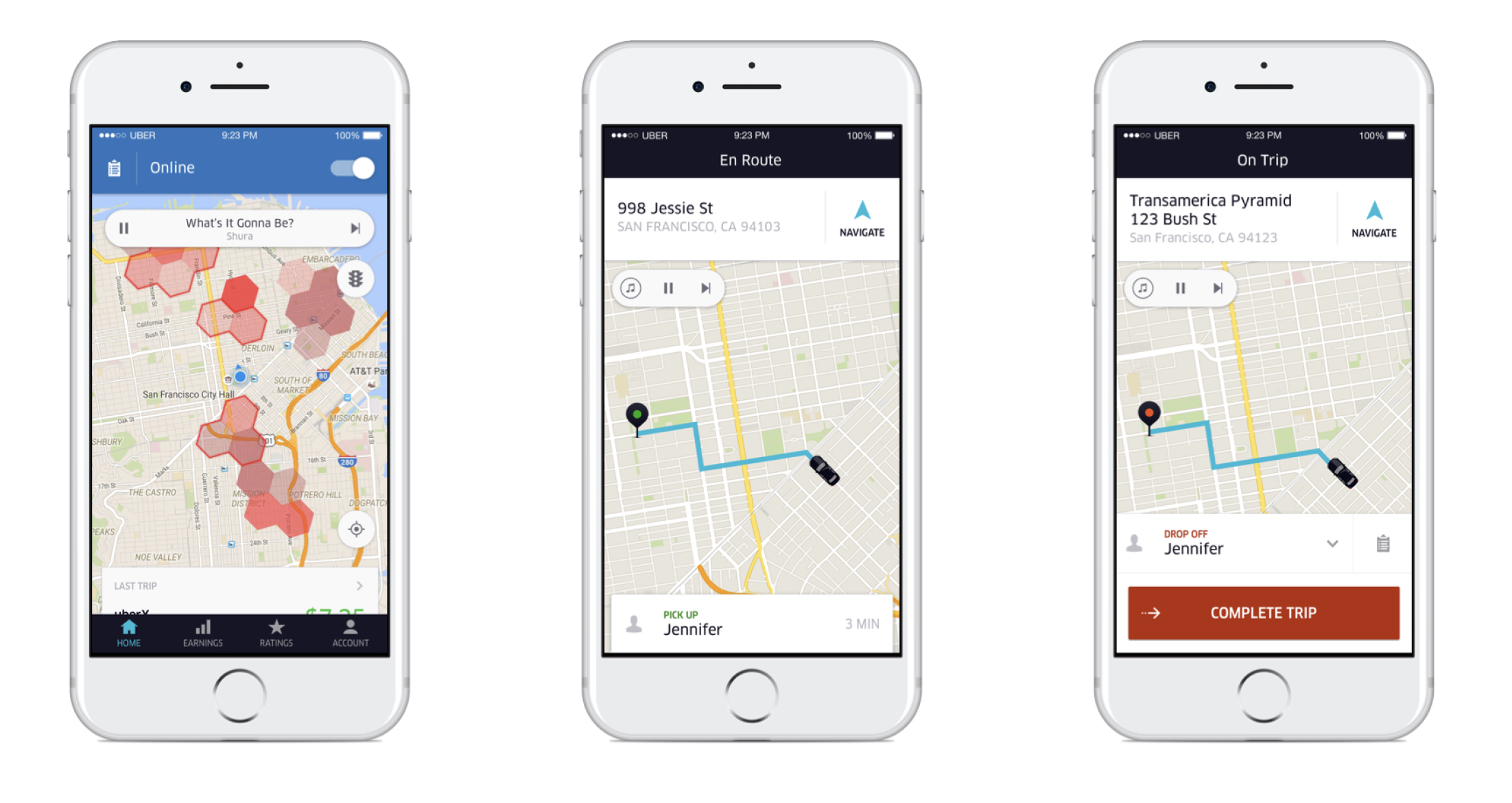
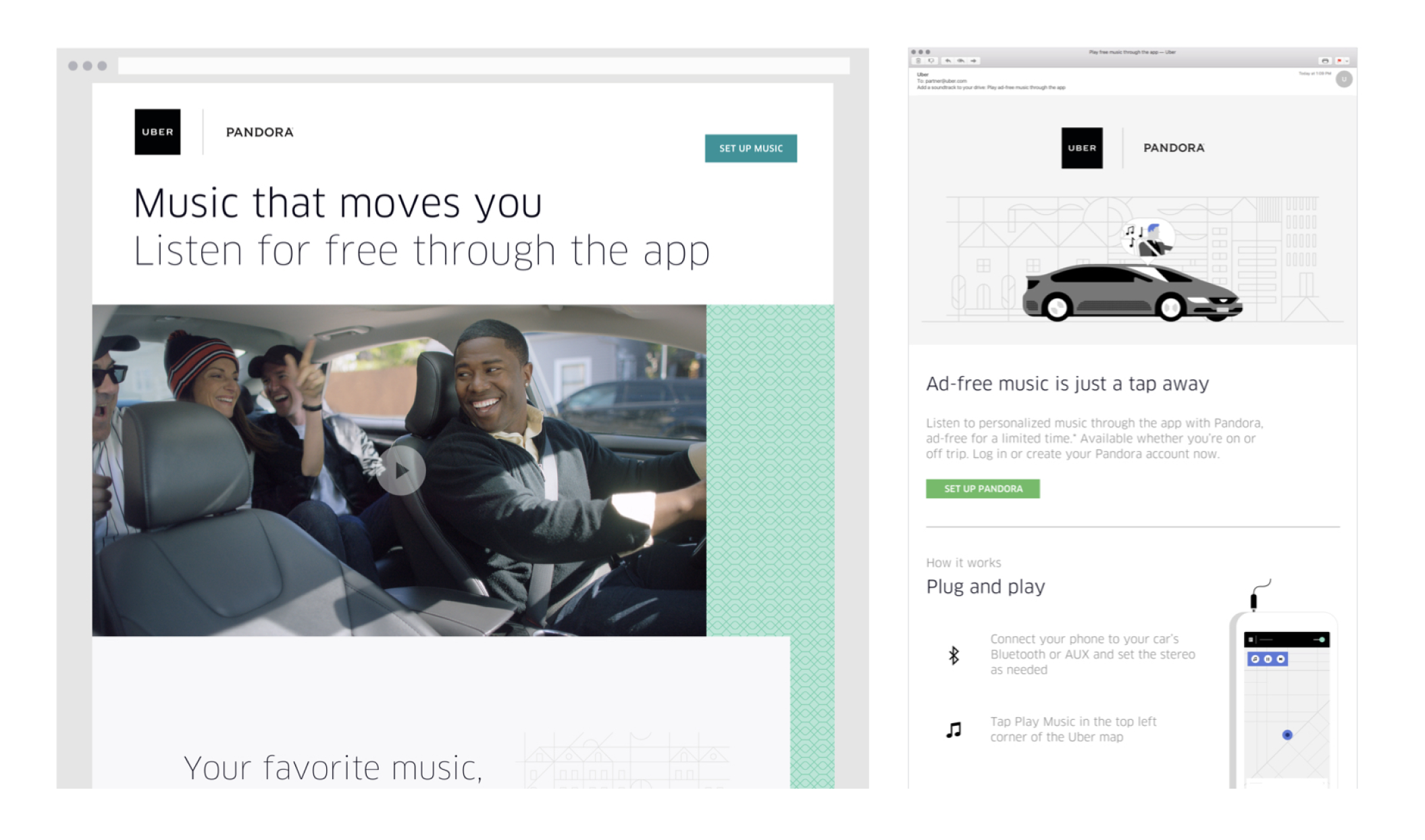
We partnered with Pandora to provide drivers with free streaming music during their drives, building up a driver-side supply of music connection. I added a music mini-player to the Uber driver app that persisted across all trip states — online, en route, and on trip — so drivers could control playback without ever leaving their navigation view. We also explored contextual recommendations based on destination, time of year, and what was happening in the city.
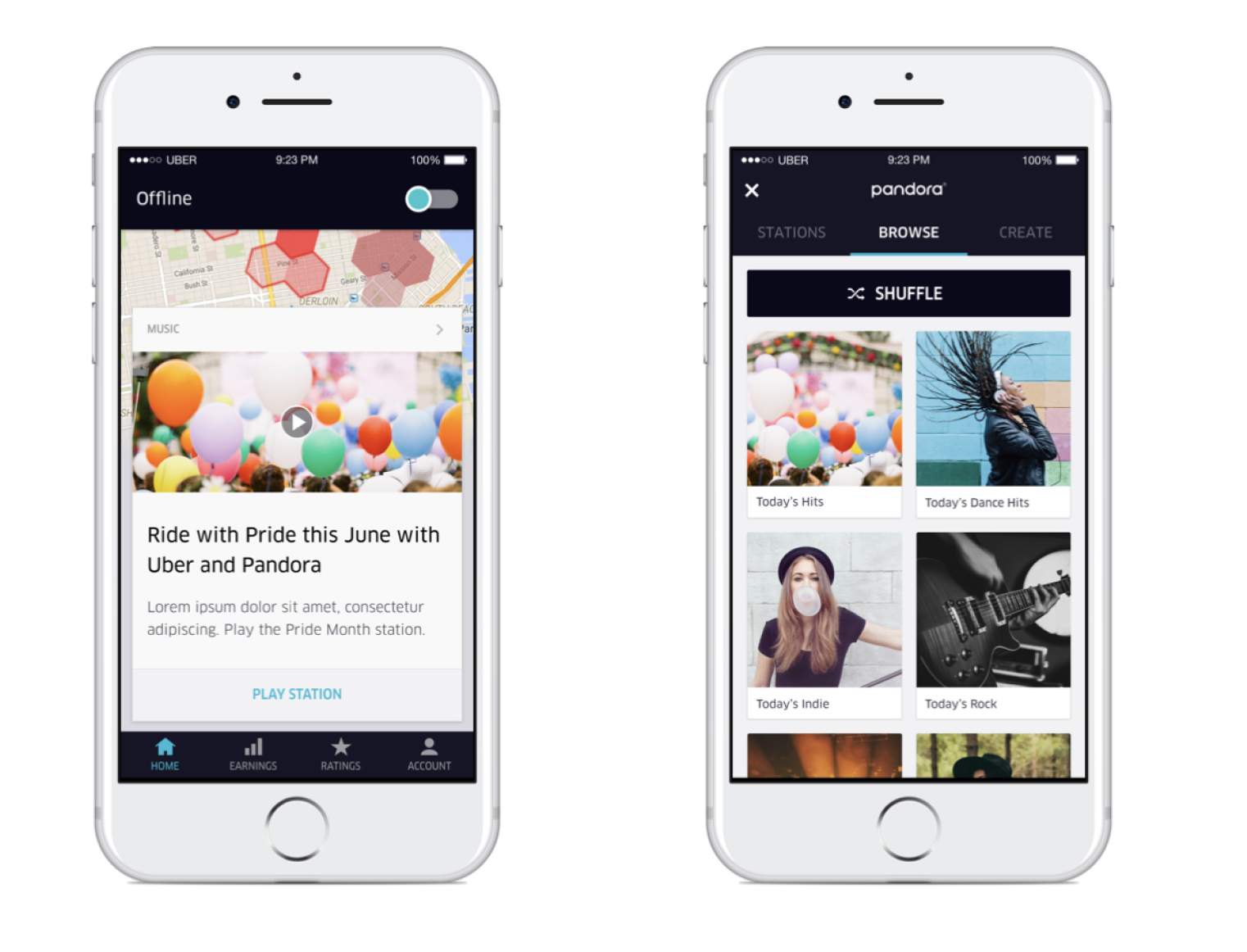
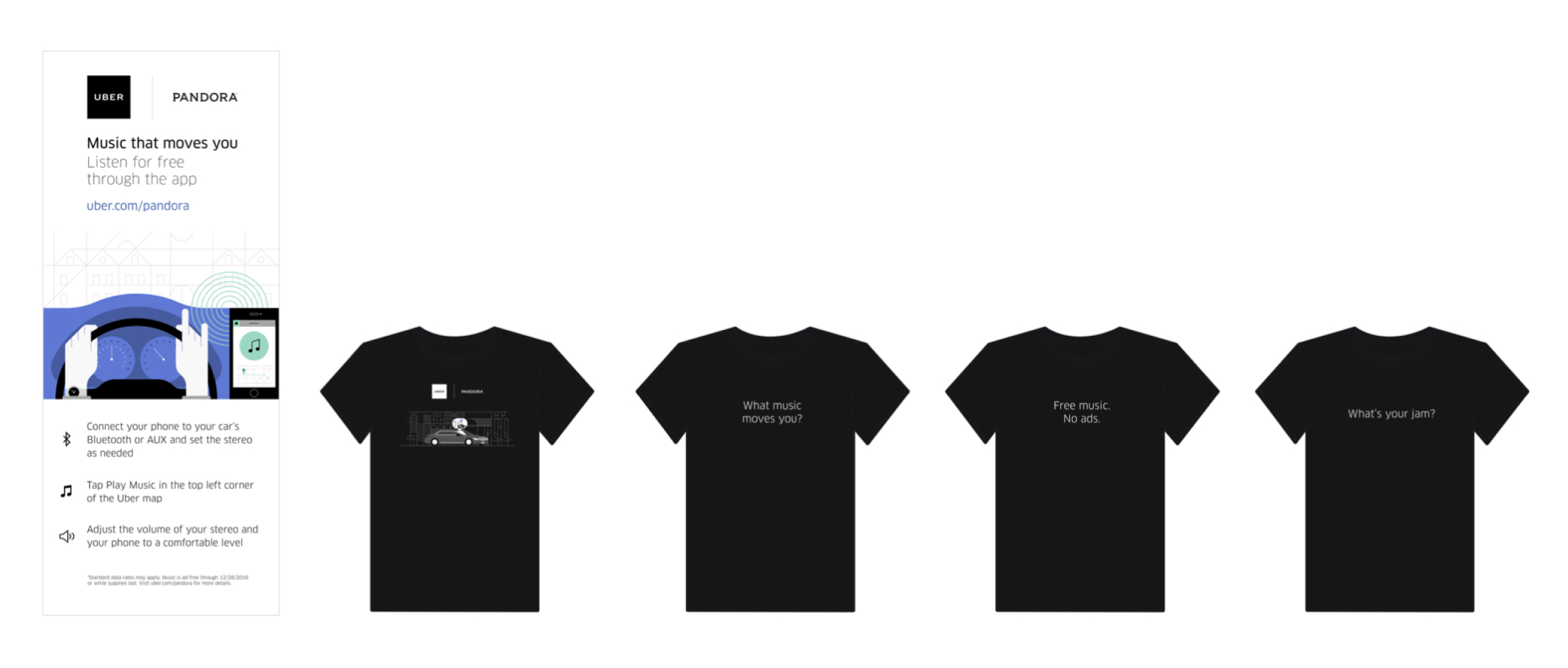
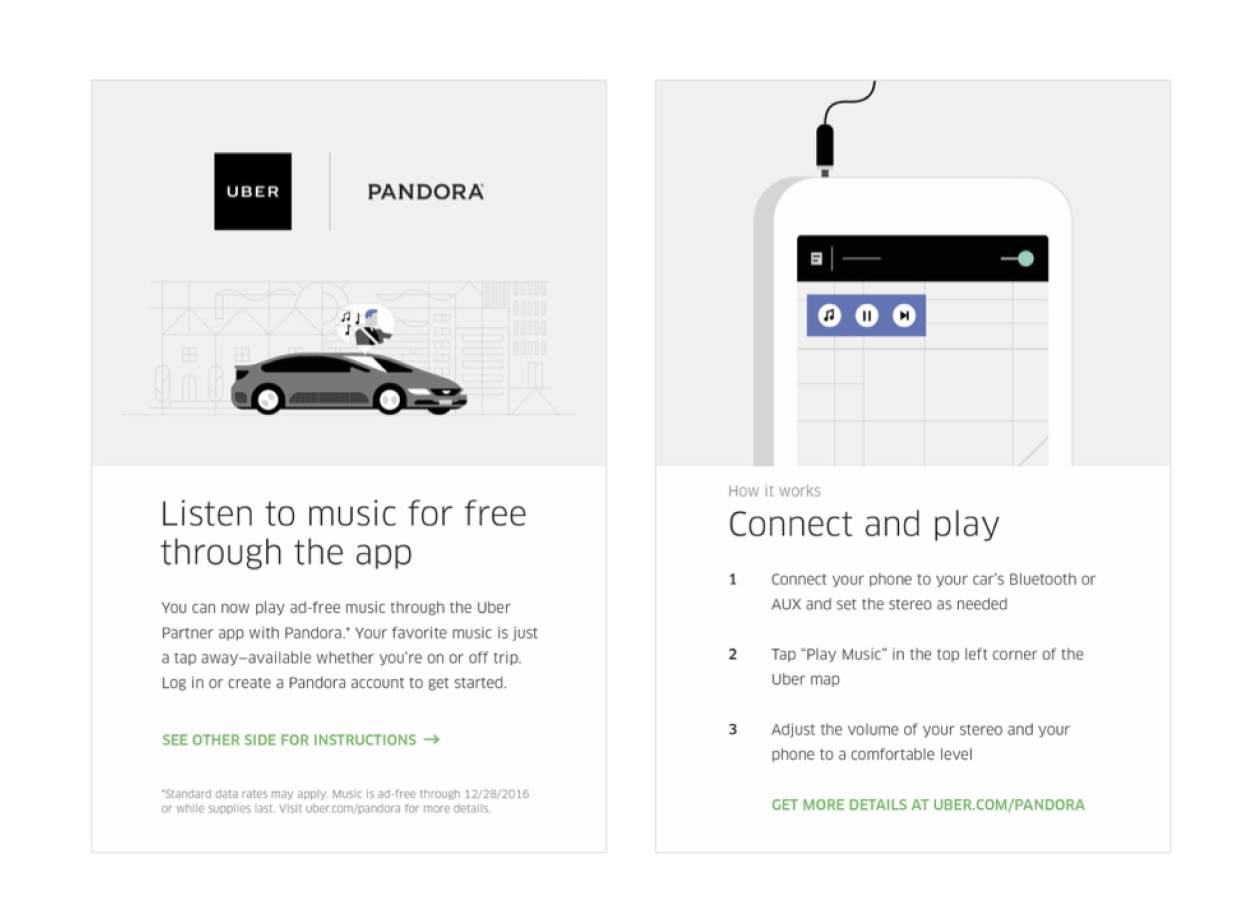
To drive adoption, I designed printed materials — cards that read “Connect and play and listen to music for free in the app” — as well as signage and t-shirts that were distributed at driver support centers across the country.
Rider Music
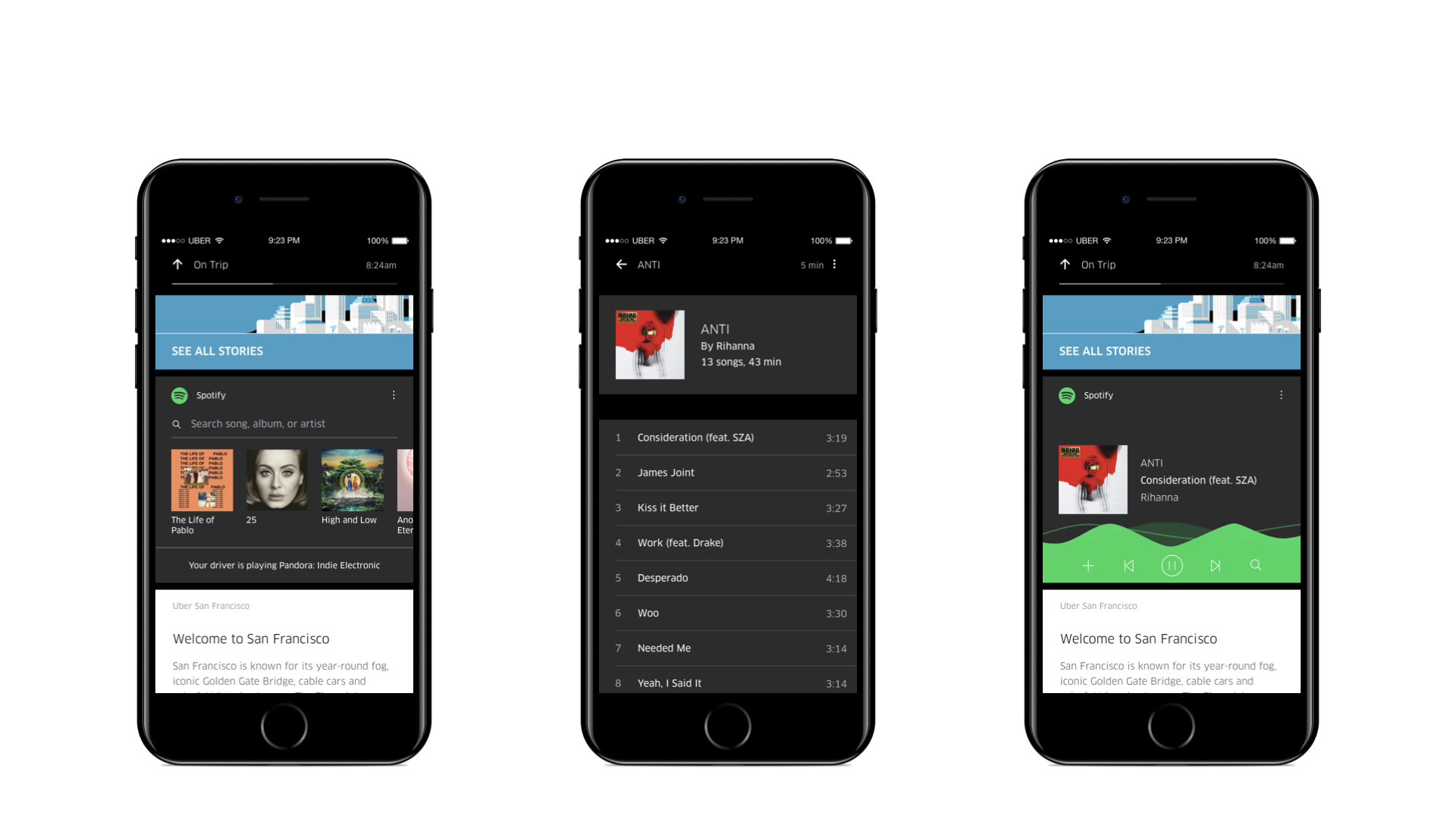
Once we hit a critical mass of drivers using the product — which we did, and were quite successful at — we turned our attention to the rider experience. We launched rider music with Pandora and expanded to include Spotify, so riders could choose music from their own library that would automatically play when the ride began.